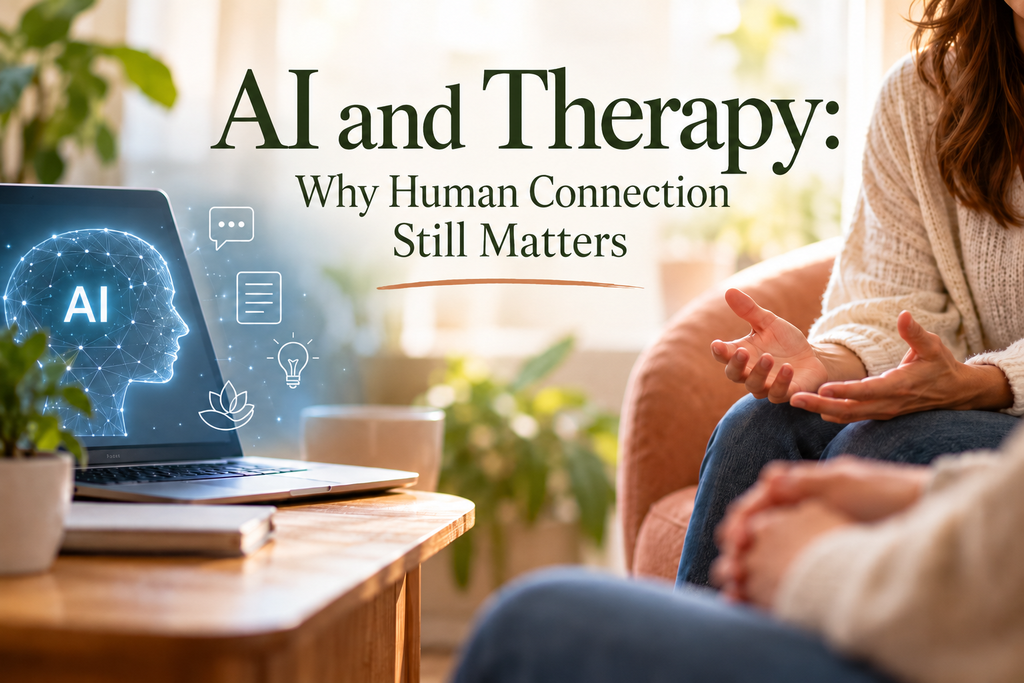
As artificial intelligence (AI) becomes increasingly woven into everyday life, questions are emerging about its place in mental health support, counselling and psychotherapy. AI can offer information, prompt reflection and point people towards resources. But can it replace the experience of sitting with another human being who listens deeply, understands, and meets us with genuine empathy?
Therapy is about far more than finding answers or acquiring coping strategies. At its heart, it is a relational endeavour: an emotional encounter in which we come to understand ourselves, explore our histories and make meaning of our experiences within a space that feels safe enough to do so.
From a relational perspective, this matters. Many of the people who come to therapy were first wounded in relationship, or through its absence. They may have grown up without consistent attunement, without someone who reliably noticed, understood and responded to their inner world. If the wound was relational, so too is the healing. The therapeutic relationship becomes the place where old patterns are lived again and gradually transformed. Through transference, the client brings earlier relational experiences into the room. Through projective identification, feelings that could not be put into words are communicated and held by the therapist. Ruptures are repaired, and attachment is slowly rebuilt.
At the centre of this work is love: the therapist’s genuine, deep love for the person in front of them. The client, perhaps for the first time, comes to feel that love. Research on the Therapist’s Empathy, Attachment, and Therapeutic Alliance: Neurobiological Perspective by Australian psychotherapist and neuroscientist Dr Trisha Stratford suggests the therapeutic relationship is associated with measurable changes in the brain. Over time, the client internalises the experience of being loved, understood and valued, and carries that relationship within them long after therapy ends. This is what heals, and it is something no algorithm can offer.
To celebrate Australia’s inaugural National Counsellors Day on 27 October 2026, I invited counsellors and psychotherapists to share their perspectives on AI, therapy and their areas of specialisation. The result is this collection of blogs exploring the work counsellors do, the people they support, and why human therapeutic connection continues to matter in an increasingly digital world.
Each contribution offers a distinct lens on counselling, reflecting the knowledge, experience and specialist skills practitioners bring to their work.
My hope is that this roundup will raise awareness of the counselling profession, showcase the richness and diversity of our work, and remind the public that while technology may have a place in mental health support, human connection remains at the heart of therapy.
ChatGPT or an Anxiety Therapist? Finding Support Beyond Coping Strategies
This blog explores how ChatGPT can support people experiencing anxiety, while highlighting why it cannot replace the human connection, emotional attunement and deeper exploration of underlying experiences that psychotherapy offers.
ChatGPT or a Therapist? Support for Overwhelmed Mothers
This blog explores how overwhelmed mothers can use AI for information and reassurance, while recognising that endless searching can sometimes distance them from their own intuition and emotional needs. It highlights how counselling offers a compassionate space for mothers to explore the pressures of motherhood, reconnect with themselves and discover what they need beyond simply trying to be a “good mum.”
Perfectionism and People-Pleasing: Can Artificial Intelligence Help You Stop People-Pleasing? Understanding the Patterns Beneath It
by Helen Spicer
This blog explores the links between perfectionism, people-pleasing and the search for external validation, examining how AI can support self-awareness while potentially reinforcing the habit of looking outside ourselves for answers. It highlights how counselling can help people understand the deeper patterns behind these behaviours, build self-trust and develop healthier boundaries without abandoning their own needs.
Why Would I see a Counsellor When I Can Talk to an AI?
This blog explores how AI is shaping our relationships, sense of identity and emotional development, and why the natural friction in human relationships is important for building resilience, empathy and healing from trauma. It considers whether AI can replace counselling, highlighting the importance of genuine human connection, therapeutic relationships, ethical accountability and the lived experience of human counsellors.
Person Centred Psychotherapy: The Relationship Heals
This blog explores person-centred psychotherapy and why the therapeutic relationship remains central to meaningful change in an age of AI. It highlights how empathy, unconditional acceptance and genuine human connection can help people access their own inner wisdom, work through trauma and attachment wounds, and move beyond surface-level solutions towards deeper healing.
AI and Being a Mature Aged Counsellor
This blog explores the experiences and strengths of mature-aged counsellors in an increasingly digital world, reflecting on how lived experience, wisdom and human connection shape therapeutic practice. It considers how counsellors can embrace AI as a tool without losing the authenticity, diversity and humanity at the heart of therapy.
What Does It Mean to Work Experientially? Reflections on Counselling
This blog explores what it means to work experientially in person-centred counselling, highlighting the importance of slowing down, noticing emotions and bodily sensations, and remaining curious about our experiences as they unfold. It considers how the therapeutic relationship creates space for deeper self-understanding and meaningful change beyond simply finding answers or solutions.
Develop Your Counsellor Identity
My low cost clinical supervision groups offer counsellors a space to strengthen their professional identity, build confidence, learn how to promote their counselling practice and articulate the value of counselling as a profession in its own right.
Find out more about my clinical supervision groups.